
ABOUT US
JESSIE WATSON BROWN
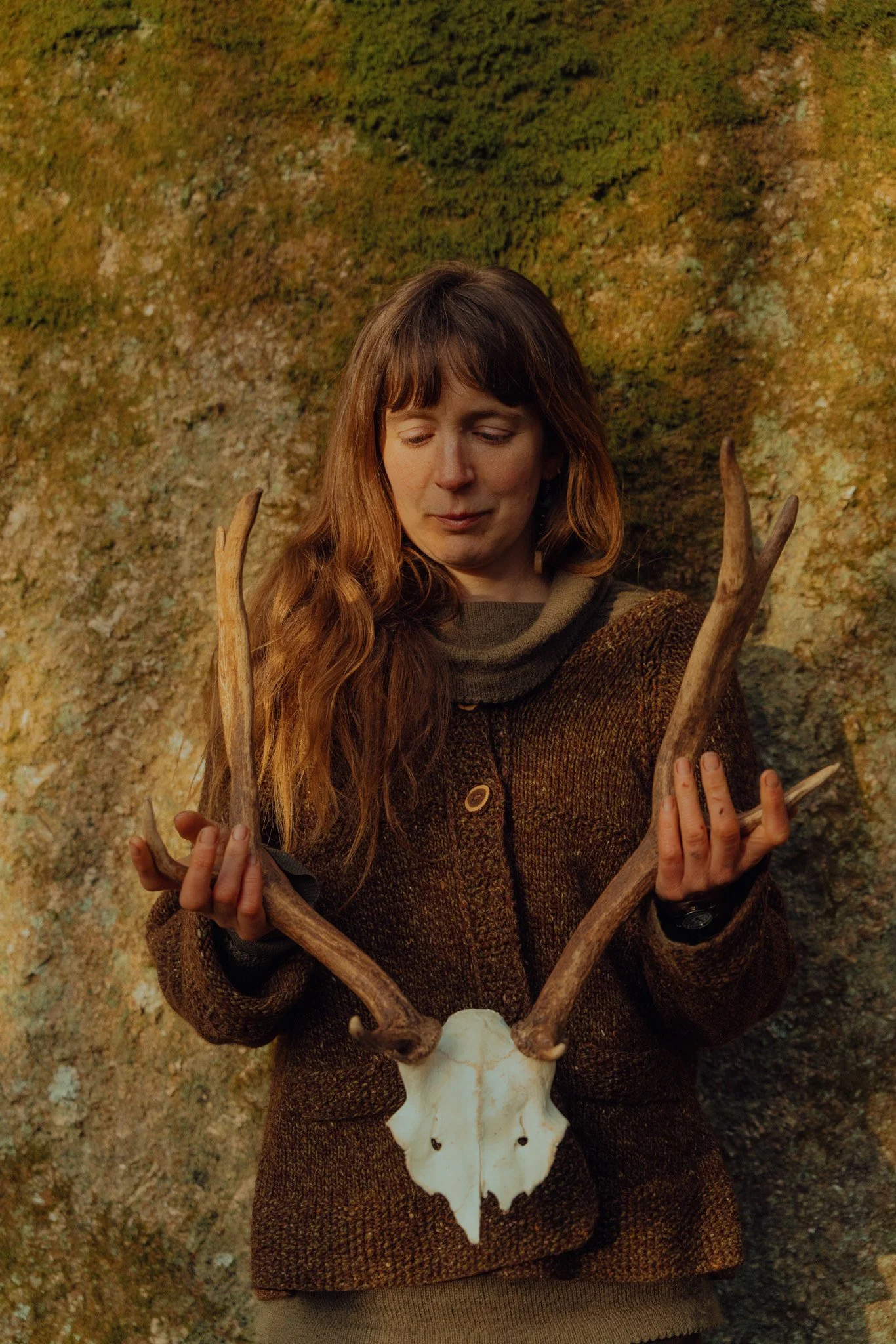
Jessie Watson Brown is a traditional hide tanner, ancestral crafter, educator and ceremonial space holder. Her roots are deep in the granite strewn land of Dartmoor, Devon - where she grew up and continues to live near and work.
A Practice of Relationship
Craft, Nature & Spirit
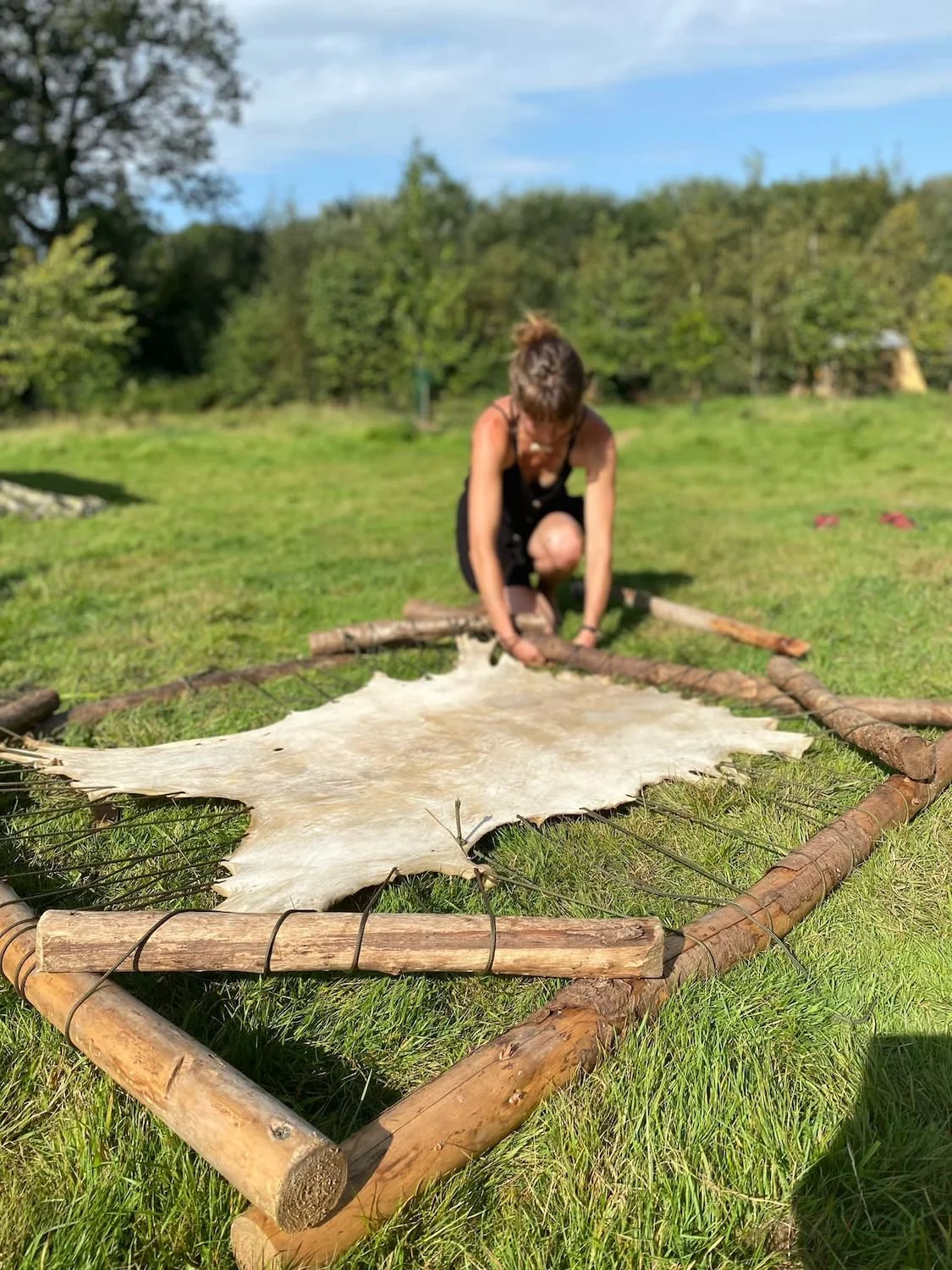
Jessie's work is simultaneously deeply practical and soulfully prayerful - weaving together craft and nature-based skills with heart, ceremony and animism.
RECIPROCITY & REMEMBERING
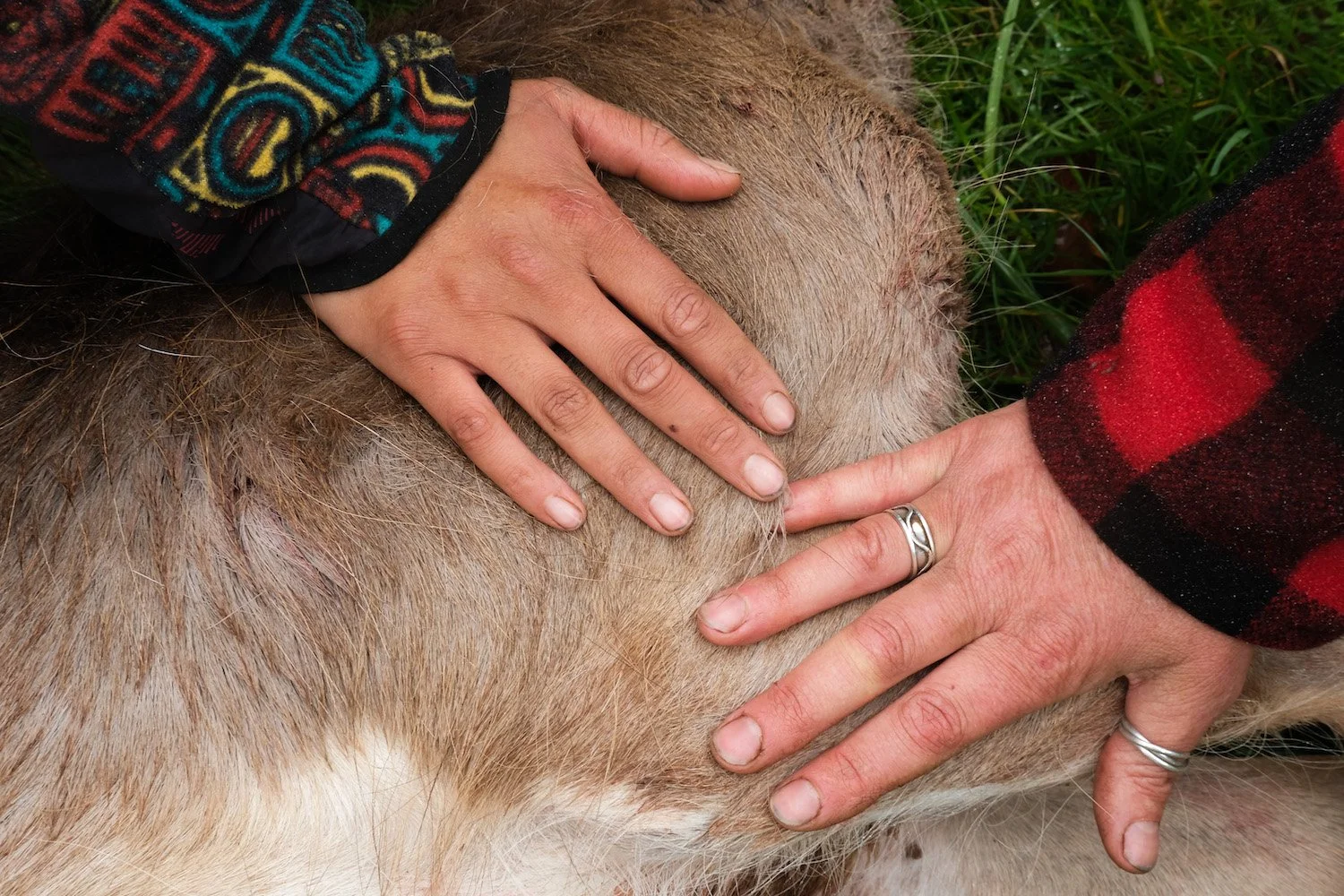
Her offerings focus on honouring life and death, remembering the skills of our ancestors and stepping into our place in the web of life with responsibility, practical reciprocity and a deep commitment to unlearning colonial ways.
Tanning as Kinship
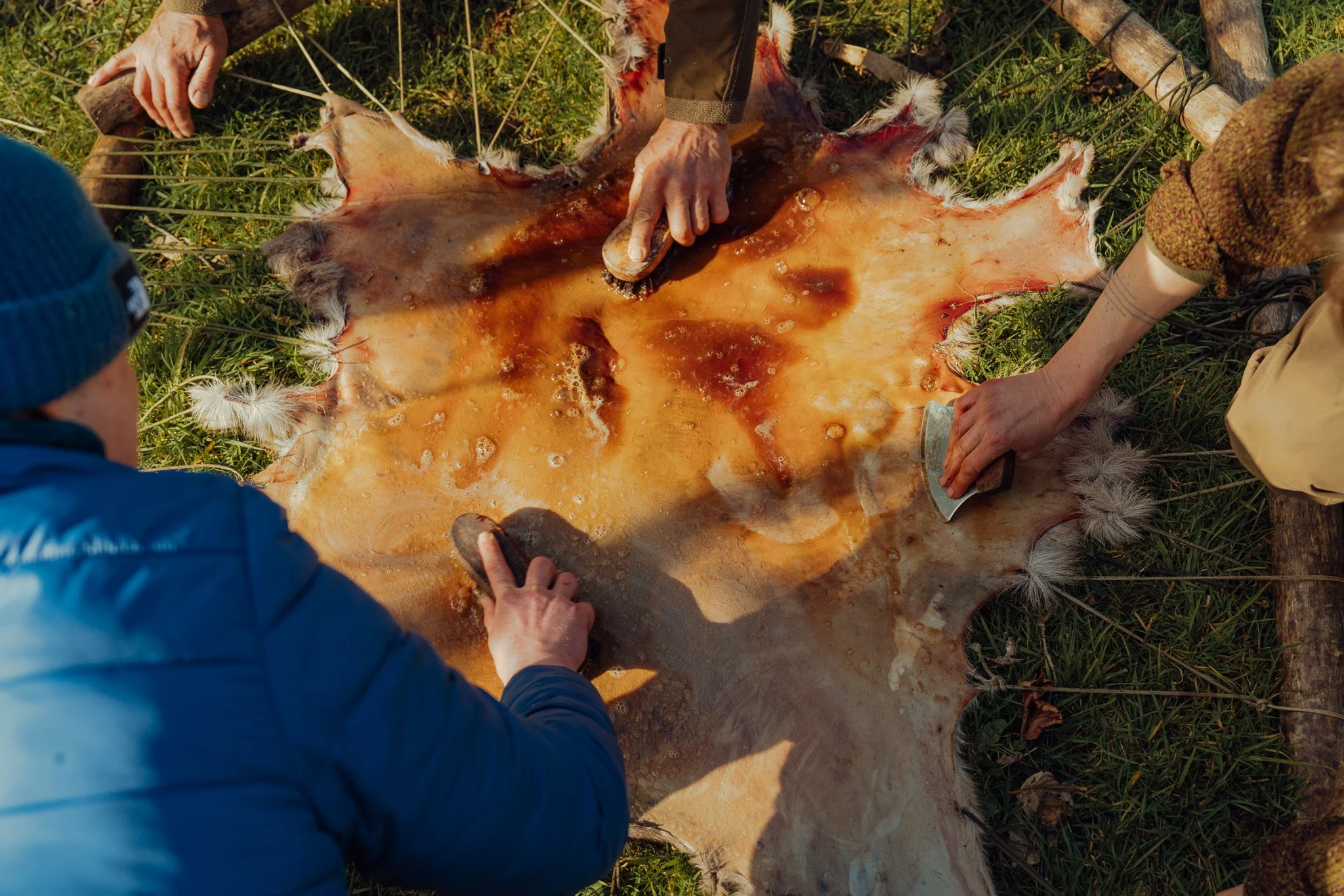
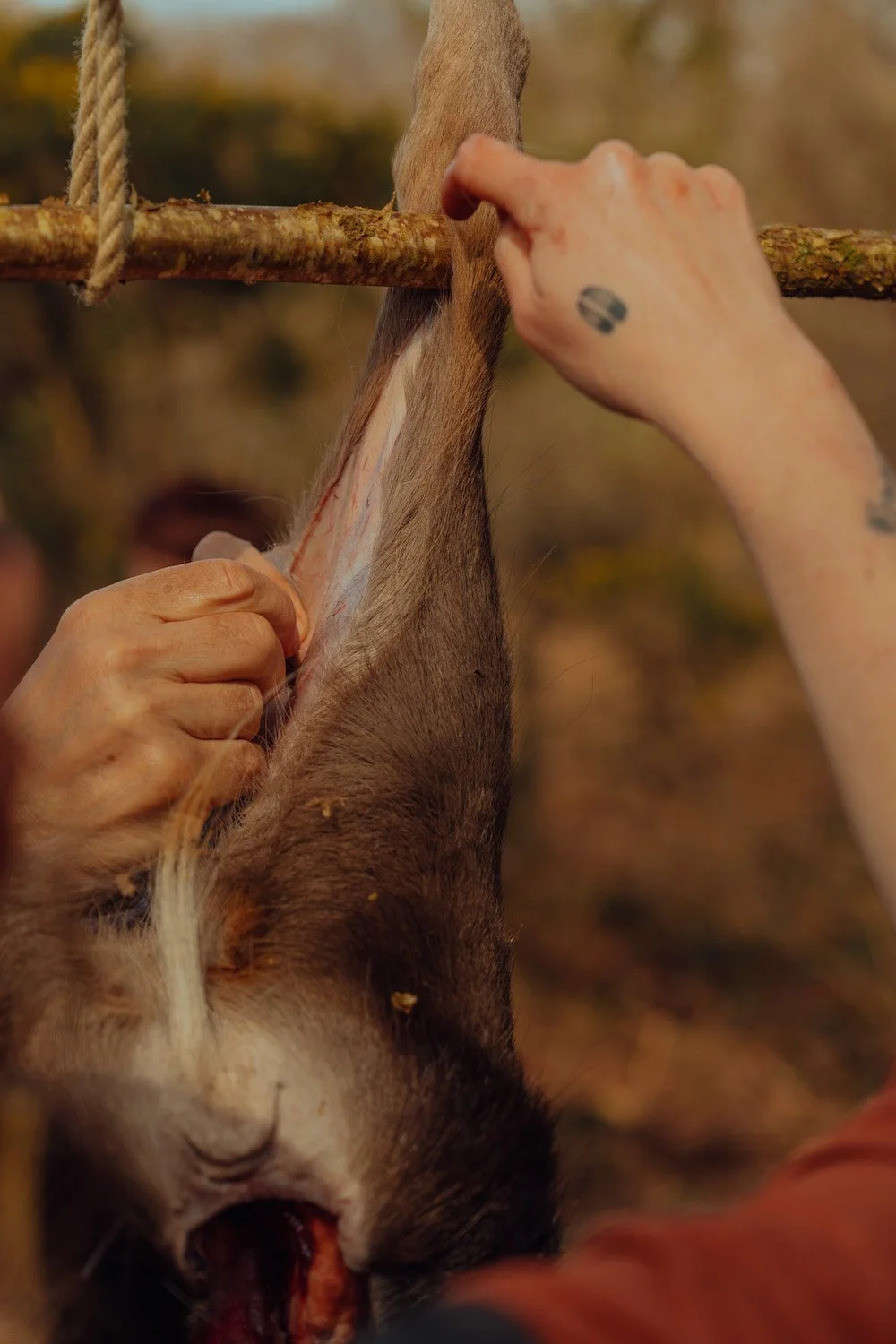
For 10 years Jessie has run a small hand-scale tannery in a stone barn on the moor - tanning mostly deer skins with natural ancient techniques using tree barks, smoke and fats. Jessie sees tanning as a gateway to relationship and kinship with the more-than-human world.
Our Ethics
-
We're aware that working with animal skins can be a controversial topic, so we've outlined our practices here with full transparency so that you can read and make up your own mind on natural hide tanning.
For every stage in the tanning process we are thorough in our standards both environmentally and ethically. Our practices, unlike commercial tanneries, hold sustainability at the heart.
Having both spent many years vegetarian and vegan we are fully aware of the sensitive topic of using dead animals for food or for materials.
We have found a place where we are very aware of our choices and stand fully behind them - being people with high standards.
We source our skins mostly from otherwise thrown away sources or small scale farms. We tan only using the most natural materials, many of which we harvest from nature ourselves.
We never tan farmed furs, sport hunted animals or ever use any man-made ‘chemical tanning’ processes.
-
We tan with great respect to each animal. Our skins are all sourced as ethically as we can. Almost all that we tan would otherwise be thrown away, and the few that aren’t ‘waste’, we divert from being sent to chemical tanneries.
Deer stalkers in the UK cull as many as 350,000 deer each year, with no other predators this is necessary both for the health of the deer and the forests they roam. Only a handful of these skins are used - some sent to commercial tanners, or small scale tanners such as ourselves. The majority end up as waste.
It surprises people that we tan fox furs, bringing up images of cruel fox hunts. The reality is that most farms - especially chicken, egg or lamb producing ones - cull foxes to support the safety of their animals. Whatever your view of this culling - these foxes are normally literally thrown in the ditch. So we choose to make use of this beautiful resource and tan the furs.
The rabbit skins are waste from game dealers and the fish skins from fish shops.
-
We tan using two methods - bark tanning, and brain (or sometimes called oil or smoke) tanning. These have been practiced for tens of thousands of years. Both methods are natural and environmentally friendly.
For bark tanning we use just that - tree bark. The bark is gleaned from a local sawmill who strip it off the oak trees they fell for timber. A discarded by-product now - but bark was once a thriving industry for tanneries of the past. Or we might selectively fell a quick-replenishing willow tree for some willow bark.
For the softening - we use oils, eggs, soap, animal fat and brains. All biodegradable, natural and not causing harm to ourselves or the earth.
-
Our leather, fur and buckskin is all safe to wear next to your skin.
Why would we need to mention this? Well it is little known that chemically tanned leather contains a high quantity of chromium - linked to cancer and skin problems.
-
We tan in a land-based setting - in the beautiful hills of Devon. All liquids from our tannery are so safe we can simply pour the used ash, bark or brain solutions onto the land without harmful consequence.
Salt is probably the main challenge - we use it to store some of the hides for future use, and when we need to wash the salt off, we carefully dispose of the salt and water, so as not to harm the land.
You can read our more detailed article about the ethics of tanning and leather here.